دور تطبيقات الذكاء الاصطناعي في تنمية مهارات التعلم الذاتي في مادة نظريات التعلم (دراسة ميدانية في جامعة طرابلس- لبنان )
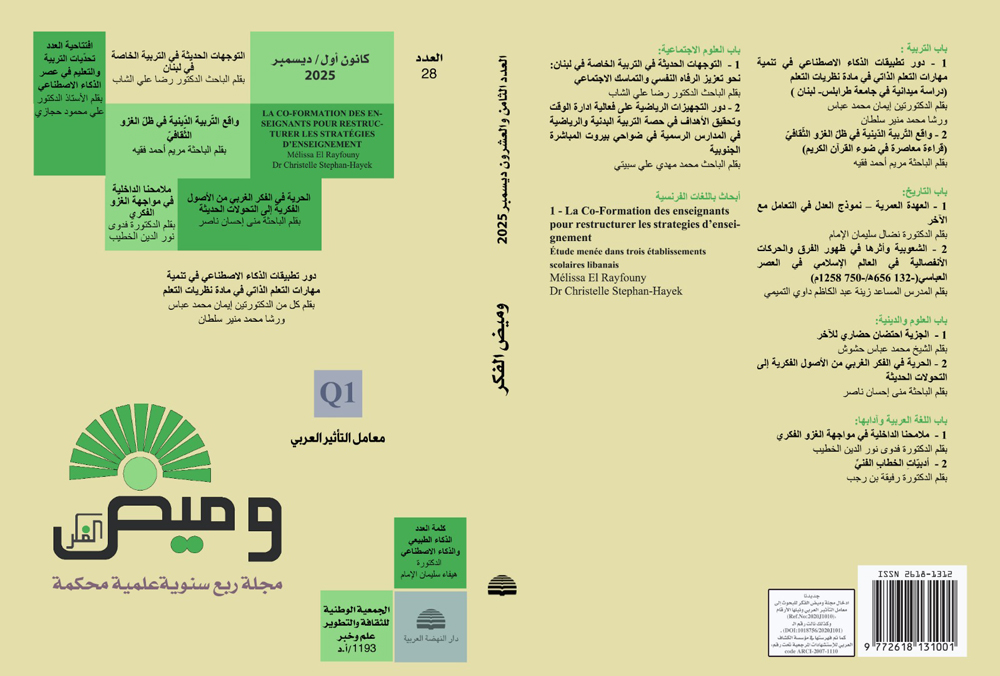
عنوان البحث: دور تطبيقات الذكاء الاصطناعي في تنمية مهارات التعلم الذاتي في مادة نظريات التعلم (دراسة ميدانية في جامعة طرابلس- لبنان )
اسم الكاتب: الدكتورة إيمان محمد عباس، الدكتورة رشا محمد منير سلطان
تاريخ النشر: 25/12/2025
اسم المجلة: مجلة وميض الفكر
عدد المجلة: 28
تحميل البحث بصيغة PDFhttps://doi.org/10.71438/2882
دور تطبيقات الذكاء الاصطناعي في تنمية مهارات التعلم الذاتي في مادة نظريات التعلم
(دراسة ميدانية في جامعة طرابلس- لبنان )
The Role of Artificial Intelligence Applications in Developing Self-Learning Skills in the Subject of Learning Theories
(A field study at the University of Tripoli – Lebanon)
بقلم الدكتورتين:
الدكتورة : إيمان محمد عباس
دكتور مساعد في جامعة طرابلس -لبنان
iman834@gmail.com
Dr. Iman Mohammad Abbas
Assistant Professor at the University of Tripoli – Lebanon
الدكتورة : رشا محمد منير سلطان
أستاذ مساعد في الجامعة اللبنانية و جامعة المدينة طرابلس –لبنان
Dr. Rasha Mohammad Mounir Sultan
Assistant Professor at the Lebanese University and City University, Tripoli – Lebanon
مستخلص البحث
تهدفُ هذه الدراسة إلى التعرّف على أثر استخدام تطبيقات الذكاء الاصطناعي في تعزيز التعلم الذاتي عند طلاب كلية التربية في جامعة طرابلس – لبنان، إذ شمل مجتمع الدراسة طلاب السنة الاولى ، وتمَّ سحب عيّنة قصديّة شملت 53 طالباً من طلاب مادة نظريات التعلّم ، اتبعت الدراسة المنهج شبه التجريبي، وذلك باستخدام مجموعة ذات تصميم واحد One Design Group إذ تم تدريس الطلاب في المرحلة الأولى على النمط التقليدي في الشرح من خلال محاضرات يقدمها الأستاذ المحاضر، أما في المرحلة الثانية تمَّ الطلب من الطلاب شرح نظرية من النظريات مع التطبيقات التربوية لها وذلك مستعينين بتطبيقات الذكاء الاصطناعي المختلفة (Chatgpt -Perplexity-Deepseek ) وتمت المقارنة بين المرحلة الأولى والثانية.
حاولنا مقارنة نتائج التحصيل الدراسي للطلاب في المرحلة الأولى من قبل استخدام تطبيقات الذكاء الاصطناعي والمرحلة الثانية من بعد استخدام تطبيقات الذكاء الاصطناعي ومدى تطوّر مهارات التعلم الذاتي والتي تتضمن مهارة التخطيط ومهارة البحث ومهارة التسجيل ، كذلك حاولنا المقارنة في النتائج للتأكد من وصول الطلاب إلى مرحلة التعلم وذلك من خلال إجراء إختبار تقييمي من بعد استخدامهم تطبيقات الذكاء الاصطناعي . وجاءت النتائج كالآتي :
- تحسن مهارات البحث والإستكشاف بنسبة 35.44% للطلاب من بعد استخدام تطبيقات الذكاء الاصطناعي في مادة نظريات التعلّم.
- تحسن التنظيم الذاتي للمعلومات بنسبة 65.58 % للطلاب من بعد استخدام تطبيقات الذكاء الاصطناعي في مادة نظريات التعلّم.
- تحسن التواصل والمشاركة المعرفية بنسبة 31.78% للطلاب من بعد استخدام تطبيقات الذكاء الاصطناعي في مادة نظريات التعلّم.
- تحسن التقويم الذاتي بنسبة 50.65 % لدى الطلاب من بعد استخدام تطبيقات الذكاء الاصطناعي في مادة نظريات التعلّم.
الكلمات المفتاحيّة : تطبيقات الذكاء الاصطناعي – التعلّم الذاتي – نظريات التعلّم .
Abstract
This study aims to identify the impact of using artificial intelligence applications in enhancing self-learning among students of the Faculty of Education at the University of Tripoli – Lebanon. The study population included first-year students, and a purposive sample of 53 students enrolled in the Learning Theories course was selected.
The study followed a quasi-experimental methodology using a One-Group Design. In the first phase, students were taught in the traditional lecture style presented by the instructor. In the second phase, students were asked to explain a specific theory along with its educational applications, utilizing various AI applications (ChatGPT, Perplexity, Deepseek). A comparison was made between the first and second phases.
We attempted to compare the students’ academic achievement results from before using AI applications (Phase 1) and after using them (Phase 2), focusing on the development of self-learning skills, which include planning, research, and recording skills. We also compared the results to verify if the students reached the learning stage by conducting an assessment test after their use of the AI applications. The results were as follows:
- Improvement in research and exploration skills by 44%among students after using AI applications in the Learning Theories course.
- Improvement in self-organization of information by 58%among students after using AI applications in the Learning Theories course.
- Improvement in communication and knowledge sharing by 78%among students after using AI applications in the Learning Theories course.
- Improvement in self-assessment by 65%among students after using AI applications in the Learning Theories course.
Keywords: Artificial Intelligence Applications – Self-Learning – Learning Theories.