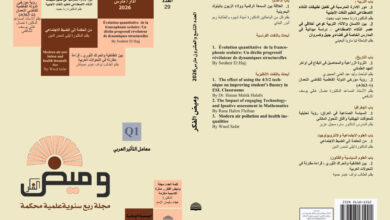
The Impact of Engaging Technology and Ipsative Assessment in Mathematics on Grade 8 Students’ Achievement and self-efficacy
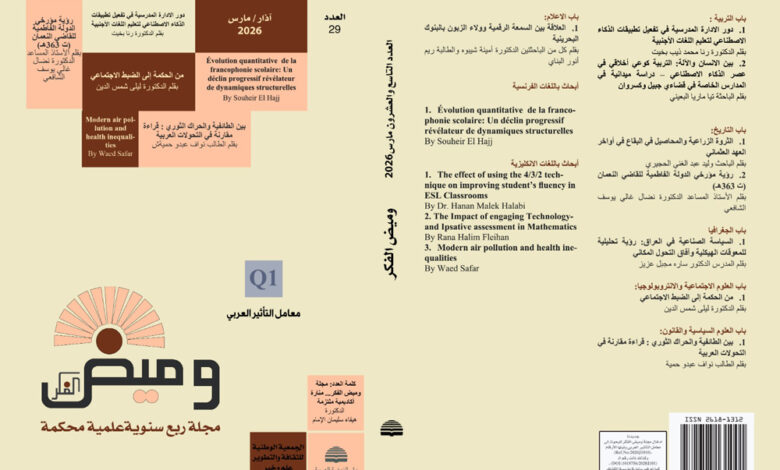
عنوان البحث: The Impact of Engaging Technology and Ipsative Assessment in Mathematics on Grade 8 Students’ Achievement and self-efficacy
اسم الكاتب: Rana Halim Fleihan
تاريخ النشر: 25/03/2026
اسم المجلة: مجلة وميض الفكر
عدد المجلة: 29
تحميل البحث بصيغة PDFThe Impact of Engaging Technology and Ipsative Assessment in Mathematics on Grade 8 Students’ Achievement and self-efficacy
Rana Halim Fleihan
p.p: 70-116
Abstract
This study examines the impact of integrating technology-supported ipsative assessment into Grade 8 mathematics teaching in Lebanese public schools in Aley district. A mixed-methods design was used, combining a teacher questionnaire, repeated student assessments administered across two intervention phases, and focus groups with teachers and students. The intervention integrated e-learning, e-assessment, and e-feedback through online mathematics applications to support self-referenced progress monitoring. Quantitative findings indicate improved student performance across the intervention phases, while qualitative findings suggest increased confidence, engagement, and perceived usefulness of feedback. Teacher survey results did not show statistically significant associations between application use and the assessed feedback/assessment categories, suggesting that implementation quality and context may matter more than platform availability alone. The study used a quasi-experimental with one-group design without a control group and explored self-efficacy qualitatively rather than through a standardized scale.
A questionnaire was shared privately and filled out by 111 math coordinators and teachers out of 145. Four assessments were shared with students in two consecutive phases via online math apps that were integrated to provide students with e-assessment, e-learning, and e-feedback. 64 students participated in this study from 5 public schools. The analysis of the collected data was performed using independent sample t-tests with SPSS software. The mean score in the 1st phase increased from 2.98 to 3.94, which indicates a notable improvement in student performance. The boxplot analysis reveals a clear shift in the distribution of scores, with over 75% of students achieving higher scores (around 4 out of 5) after the intervention. The mean score in the 2nd phase increased from 3.11 to 3.92, indicating a positive shift. The distribution of scores shifted towards higher performance levels, with over 75% of students achieving scores of 4 or 5 out of5.
Keywords: Ipsative e-assessment, educational technology, ipsative e-feedback, self-efficacy, Computer-based intervention
الملخص
تسلّط هذه الدراسة الضوء على أثر تطبيق التقييم التقارني الذاتي (Ipsative) القائم على التكنولوجيا في تدريس الرياضيات لطلبة المرحلة المتوسطة، وتصف تطوّر أداء طلاب الصف الثامن في المدارس الرسمية اللبنانية في قضاء عاليه.
تم اعتماد منهجية بحثية تجمع بين الأسلوبين الكمي والنوعي، حيث وُزِّع استبيان بشكل خاص وتمت تعبئته من قبل 111 منسقًا ومعلمًا للرياضيات من أصل 145. كما تم تقديم أربعة اختبارات للطلاب على مرحلتين متتاليتين عبر تطبيقات رياضيات إلكترونية تم دمجها لتوفير التقييم الإلكتروني، والتعلم الإلكتروني، والتغذية الراجعة الإلكترونية. شارك في هذه الدراسة 64 طالبًا من خمس مدارس رسمية.
أُجري تحليل البيانات المجمّعة باستخدام اختبار (t) للعينات المستقلة من خلال برنامج SPSS. وقد ارتفع المتوسط الحسابي في المرحلة الأولى من 2.98 إلى 3.94، مما يشير إلى تحسن ملحوظ في أداء الطلاب. كما أظهر تحليل مخطط الصندوق (Boxplot) تحولًا واضحًا في توزيع الدرجات، حيث حقق أكثر من 75٪ من الطلاب درجات أعلى (حوالي 4 من 5) بعد التدخل. وفي المرحلة الثانية، ارتفع المتوسط الحسابي من 3.11 إلى 3.92، مما يدل على تحسن إيجابي. كما تحوّل توزيع الدرجات نحو مستويات أداء أعلى، حيث حقق أكثر من 75٪ من الطلاب درجات 4 أو 5 من 5.
الكلمات المفتاحية: التقييم الإلكتروني التقارني الذاتي، التكنولوجيا التعليمية، التغذية الراجعة الإلكترونية التقارنية الذاتية، الكفاءة الذاتية، التدخل القائم على الحاسوب.