Le Zajal libanais comme contre-archive orale: résistance symbolique, mémoire collective et paradoxe de la reconnaissance institutionnelle
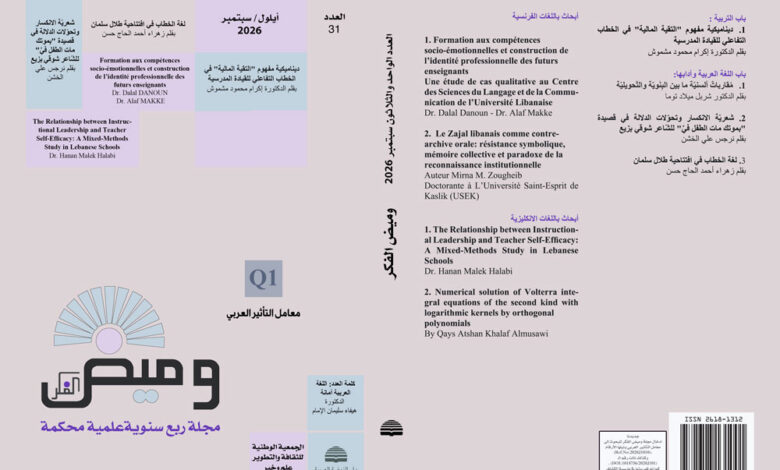
عنوان البحث: Le Zajal libanais comme contre-archive orale : résistance symbolique, mémoire collective et paradoxe de la reconnaissance institutionnelle
اسم الكاتب: Mirna M. Zougheib
تاريخ النشر: 25/09/2026
اسم المجلة: مجلة وميض الفكر
عدد المجلة: 31
تحميل البحث بصيغة PDFLe Zajal libanais comme contre-archive orale :
résistance symbolique, mémoire collective et paradoxe de la reconnaissance institutionnelle
الزجل اللبناني بوصفه أرشيفًا مضادًا شفويًا، المقاومة الرمزية، الذاكرة الجماعية ومفارقة الاعتراف المؤسسي
Auteur :Mirna M. Zougheib
Doctorante Département de conservation, restauration des biens culturels et art sacré
Faculté des lettres et des sciences
Université Saint-Esprit de Kaslik (USEK), Liban
mirna.m.zgheib@net.usek.edu.lb
Co-auteur : Rév. Badih El Hajj, PhD
Directeur Centre du patrimoine musical Université Saint-Esprit de Kaslik (USEK), Liban
badihelhajj@usek.edu.lb
P.P :168-199
مستخلص البحث
يُدرج الزجل اللبناني منذ سنة 2014 على القائمة التمثيلية للتراث الثقافي غير المادي للإنسانية لدى اليونسكو،بوصفه تقليداً شعرياً شفوياً يقوم على المبارزة الارتجالية، واللهجة اللبنانية، والغناء، والردّ، والحضور الجماعي.
غير أنّ هذا الاعتراف الدولي لم يُلغِ هشاشة شروط انتقاله الفعلي، إذ ما زال حضوره محدوداً في المناهج التعليمي وفي مؤسسات التدريب، وفي الأرشفة الرقمية الموثّقة. تنطلق هذه الدراسة من هذا التوتر بين منطق الاعتراف المؤسسي، الذي يسمّي ويصنّف ويحفظ ويمنح الشرعية، ومنطق الأداء الشفوي، الذي لا يحيا إلا في الصوت، والمقام، والارتجال، والتفاعل مع الجمهور، والذاكرة الجماعية.
تقترح الدراسة قراءة الزجل اللبناني بوصفه »أرشيفاً مضاداً شفوياً«، أي شكلاً من أشكال حفظ الذاكرة لا يقوم أساسا على الوثيقة الثابتة، بل على إعادة التفعيل، والردّ، والإيقاع، والتلقي المجتمعي. وتستند هذه القراءة إلى مقاربة نظرية تحليلية تعتمد على الأدبيات الثانوية وأمثلة موثّقة، من بينها مبارزة بيت مري، وصيغة العتابا، وأشعار طليع حمدان، مع الاستفادة من أعمال سكوت، دو سيرتو، زومثور، دريدا، ترويو، وباحثين متخصصين في الزجل اللبناني. وتخلص الدراسة إلى أن صون الزجل لا يتحقق بمجرد حفظ آثاره أو تسجيل عروضه، بل يقتضي مأسسة شروط ممارسته الحية: التعليم، والتدريب، والمسابقات، والأرشفة السياقية، ومشاركة الشعراء والجمهور والذاكرة الاغترابية في استمراره.
كلمات مفتاحية: الزجل اللبناني؛ الأرشيف المضاد الشفوي؛ المقاومة الرمزية؛ الذاكرة الجماعية؛ التراث الثقافي غير المادي؛ المبارزة الشعرية؛ الأداء الشفوي.
Abstract
Inscribed in 2014 on UNESCO’s Representative List of the Intangible Cultural Heritage of Humanity, Lebanese Zajal — an oral poetic tradition based on improvised verbal dueling, Lebanese dialect, singing, reply, and communal co-presence — occupies a paradoxical position: it has achieved international recognition while remaining structurally vulnerable in its concrete conditions of transmission. This article argues that the paradox is not merely institutional delay but reveals a deeper tension between two logics: the archival logic of heritage recognition, which identifies, classifies, preserves, and labels; and the performative logic of oral resistance, which lives through voice, address, improvisation, context, and community recognition. Drawing on James C. Scott’s theory of hidden transcripts, Michel de Certeau’s arts of doing, Paul Zumthor’s poetics of the voice, and Derrida’s and Trouillot’s theories of the archive and historical silences, the article develops the notion of oral counter-archive to understand Zajal as a device of collective memory, vernacular transmission, and symbolic resistance. The article explicitly positions itself as a theoretical and analytical synthesis based on secondary scholarship and documented performance examples, including the Beit Mery verbal duel, the ʻataba form, and the historical verse of Taliʻ Hamdan. It also integrates the works of Badih El-Hajj, Adnan Haydar, Paula Haydar, Lambert, and Wahaïbeh, while situating its conceptual proposal within critical counter-archive studies. Through a cautious comparison with Basque bertsolaritza and Latin American repentismo, the article argues that the living safeguarding of a performative oral tradition depends less on preserving traces than on institutionalizing the conditions of practice. It concludes by distinguishing the patrimonialization of memory from the institutionalization of practice, and by arguing that preserving Zajal means not only conserving what has been said but creating the conditions for new voices to answer.
Keywords: Lebanese Zajal; oral counter-archive; symbolic resistance; hidden transcripts; intangible cultural heritage; poetic duel; collective memory; performative orality.