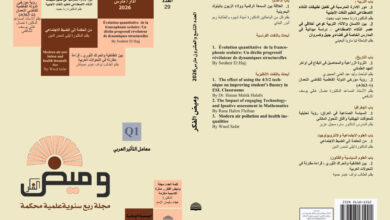
Modern Air Pollution and Health Inequalities: A Global Panel Study (2019–2000 CE)
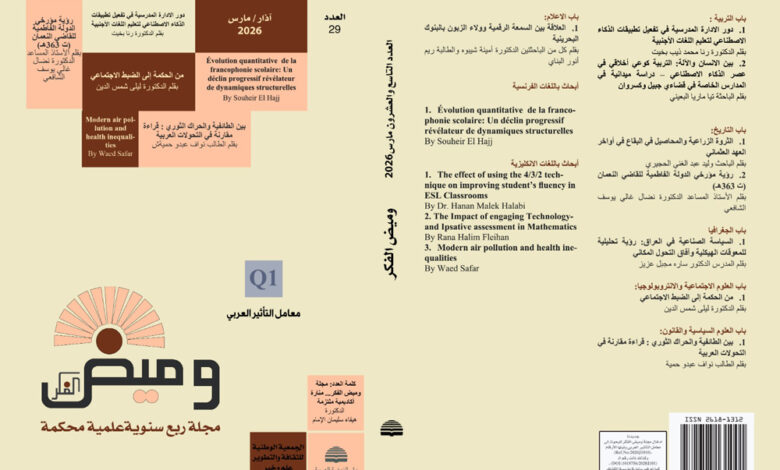
عنوان البحث: Modern Air Pollution and Health Inequalities: A Global Panel Study (2019–2000 CE)
اسم الكاتب: Waed Safar
تاريخ النشر: 25/03/2026
اسم المجلة: مجلة وميض الفكر
عدد المجلة: 29
تحميل البحث بصيغة PDFModern Air Pollution and Health Inequalities: A Global Panel Study (2019–2000 CE)
Done by: Waed Safar
p.p:117-144
Abstract
This paper investigates the link between modern air pollution and health inequalities on a global scale, for the period 2000–2019. Using a panel model, the results show that SO2 and NOx emissions increase global burden disease inequality and cardiovascular burden disease inequality, but do not affect mental burden disease inequality. Furthermore, income inequality increases health inequality, regardless of the health outcome.
Therefore, to reduce health inequalities, it is suggested to reduce pollution and ensure equitable access to the healthcare system. According to these results, a reduction in emissions can induce a win–win situation: a reduction in pollution and an improvement in health levels.
Keywords: Health inequality; Modern air pollution; Income inequality; Growth
الملخص:
تبحث هذه الدّراسة العلاقة بين تلوّث الهواء الحديث وعدم المساواة الصحيّة على المستوى العالمي خلال مدة 2000-2019. ويتم استخدام نموذج بيانات بانل (panel). وتُظهر النّتائج أنّ انبعاثات ثاني أكسيد الكبريت(SO2) وأكاسيد النيتروجين (NOx) تزيد من عدم المساواة في عبء الأمراض النّفسيّة.
علاوة على ذلك، تُبيّن النّتائج أنّ عدم المساواة في الدّخل يزيد من عدم المساواة الصحية، بغض النّظر عن نوع المؤشر الصّحي المستخدم.
وبالتالي، من أجل الحد من عدم المساواة الصّحيّة، يُقتَرَح تقليل مستويات التلوّث وضمان وصول عادل إلى نظام الرّعاية الصّحيّة. وتُشير النتائج إلى أنّ خفض الانبعاثات يُمكن أن يُحقّق وضعا رابحاً للجميع، يتمثل في تقليل التلوّث، وتحسين مستويات الصّحة.
الكلمات المفتاحية: عدم المساواة الصّحية. تلوّث الهواء الحديث. عدم المساواة في الدّخل. النّمو.